
By Nikki Marsh, Chief Revenue Officer, DQE Communications
The local fiber narrative is quietly transforming how businesses, governments, and communities power their ambitions. National headlines continue to showcase the titanic investments and glossy campaigns of giga-scale internet providers but underneath lies a persistent truth: the impact of fiber expansion is most profoundly felt at the community level, where local and regional providers bring tailored expertise, responsive service, and investment that reverberate throughout the local economy.
When looking at fiber providers, take care not to overlook the best-value option that could be right next door. It may be easy to assume that the big incumbents are the logical choice because of name recognition. Business and local leaders who look deeper will often find local providers offering the same or better network and service sophistication, but with the added benefits of having skin in the game.
The Case for Local: What Sets Community-Based Fiber Providers Apart
Responsiveness and Accountability
Local teams, embedded in the regions they serve, have mastered the art of rapid deployment; a critical edge as businesses and governments can scarcely afford extended downtime or bureaucratic delays. Proximity enables streamlined permitting and construction, eliminating the inertia often found with national corporations whose priorities are governed hundreds or thousands of miles away. In a sector where time quite literally means money, the ability to convert a permit into a live connection within days, not weeks, translates into competitive advantages for local businesses and mission-critical continuity for public institutions.
The technical architecture of modern fiber networks furthers these advantages. While legacy copper, cable and DSL networks promised theoretical maximums that often faltered under peak demand, fiber connections deliver symmetrical upload and download speeds with rock-solid consistency. For the business sector, where cloud computing, big data analytics, and remote collaboration have become foundational, this means boardroom presentations, real-time analytics dashboards, and multi-gigabyte file transfers proceed without the performance hiccups that still plague older technologies.
Governments and public agencies, too, are reaping the rewards of dedicated, high-reliability local fiber networks. Nowhere is this more evident than in emergency services. Next-generation E911 systems providing real-time data, GIS integration, and video dispatch simply cannot tolerate latency or outages. Local fiber’s inherent redundancy and failover capabilities, backed by 24/7 in-market technical teams, offer public safety managers the confidence that, should disaster strike, their communications will remain resilient and responsive.
Enhanced connectivity made available to K-12 education through programs like E-Rate support the transition toward gigabit-ready campuses and administrative centers. Dedicated fiber links protect sensitive student data while unlocking bandwidth-intensive learning opportunities, from high-definition interactive labs to advanced digital testing environments. Local providers are uniquely positioned to help schools adapt and scale in real time.
Local investment in physical infrastructure brings a host of “multiplier effects” throughout local economies. Where high-capacity, future-proof connectivity leads, enterprises flourish and new businesses move in. Local fiber is fast becoming the litmus test for economic development to retain the brightest talent and recruit the next generation of employers.
AI-Ready and People-First
But perhaps the most exciting horizon is at the intersection of local fiber networks and artificial intelligence. AI workloads and real-time analytics are moving from massive cloud data centers to the network edge at branch offices, local manufacturing floors, city government operations, and even emergency vehicles. Local fiber providers are preemptively designing architectures and provisioning dark fiber to ensure that when their communities are ready to deploy edge AI solutions, the network is already up to the task.
Today’s fiber landscape is measured not in marketing budgets, but in the technical and operational advantages local providers bring. Contracts are backed by transparent service level agreements that guarantee uptime, performance, and responsiveness. When a municipality’s data center or a local bank’s operations go dark, it isn’t a distant help desk answering the call. It’s a nearby network engineer who knows both the infrastructure and its importance to the community.
It just means more when you know you or your family members rely on that hospital, school, or bank. No big company could ever offer that level of dedication. Community-based providers harness local talent, create durable jobs, and establish vendor relationships that keep the economic benefits circulating regionally. They recognize that digital adoption isn’t only about connectivity but truly understanding local needs, because they are shared needs. Local fiber providers are closing their own digital divide through hands-on engagement and continuous process improvement.
Local fiber investment creates a sort of self-propelling momentum that is powerful to watch. Legacy paperwork, cumbersome permitting, and field practices that may not have evolved in years give way to goal-oriented systems. Municipalities embracing digital permitting and streamlined processes consistently report shorter timelines from design to service delivery, yielding not just infrastructure but meaningful progress.
The National Telecommunications & Information Administration states “In the near-term, investments in broadband infrastructure help create jobs and business growth by supporting the installation and upgrade of fiber-optic networks, wireless towers, and other high-tech components.” Some providers have not been able to afford the higher cost of installing fiber optic infrastructure.
DQE recognizes the need for speed and quality Internet services. We understand what U.S. businesses need to thrive and remain competitive in the international market. As the need for speed is growing, so is DQE Communications’ fiber optics network.
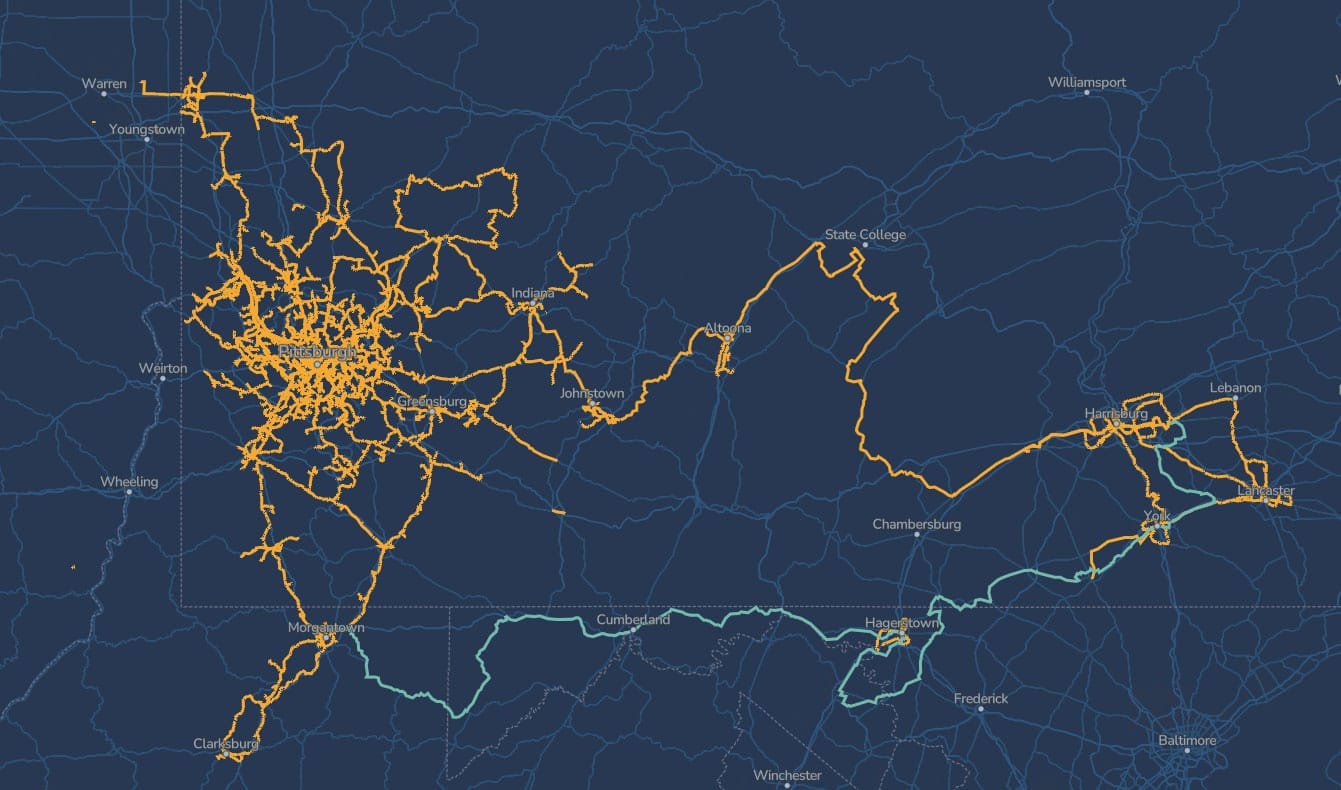
This past year, we added 256 miles of fiber optic lines to expand high-speed Internet coverage in Pittsburgh and surrounding areas. Installing more fiber optics cables within the region benefits Pittsburgh area businesses. It provides the reliable, fast Internet services necessary for them to remain competitive.
Future-proofing through Fiber
Technical metrics like symmetrical throughput, four-nines or better uptime, single-digit millisecond latency, enforceable SLAs, and genuinely rapid support now separate best-in-class providers from the pack. But it is the narrative and the story of local responsiveness, economic renewal, educational empowerment, and technological readiness for the challenges of tomorrow that truly resonates.
This is the fiber renaissance at the local level: a convergence of technology, policy, and human-driven service that is transforming the way business, government, and community institutions approach the future. The smartest investments, from city halls to healthcare campuses and advanced manufacturers, are those that recognize fiber is not just an upgrade but an underpinning for twenty-first-century success that is capable of supporting everything from disaster response and smart city initiatives to AI-powered innovation and new business formation.
Actionable Insights for Community Leaders
What to Look for in a Provider
For community leaders evaluating fiber partnerships, several key criteria predict success:
Assess Local Presence and Accountability: Do providers maintain local offices, employ local staff, and participate actively in community organizations? The depth of local engagement often predicts service quality and responsiveness.
Examine Technical Capabilities: Request specific data on fiber network architecture, symmetrical speed offerings, and committed throughput guarantees. Local providers should demonstrate superior performance through dedicated fiber infrastructure.
Practical Steps
Understand Economic Impact: Consider broader economic implications of provider selection, including local hiring, community investment, and support for local business.
Evaluate Innovation Capacity: Assess the provider’s ability to adapt services for emerging local needs, pilot new technologies, and respond quickly to changing community requirements.
The Path Forward
Fiber connectivity will continue to grow and expand. The choice between local and national providers becomes increasingly consequential. Community-based providers deliver superior customer experiences, stronger economic development outcomes, and more resilient network operations.
For community leaders, economic development professionals, and advocates, the message is clear: the local advantage in fiber connectivity isn’t just about supporting small businesses. It’s about choosing providers whose success is fundamentally tied to community prosperity.
The giants may dominate the headlines, but the transformative fiber connectivity success stories are being written at the community level, one local connection at a time.

Nikki Marsh is the CRO of DQE Communications, where she oversees all revenue-generating functions, including sales, marketing, and customer service. DQE Communications, headquartered in Pittsburgh, Pennsylvania, is a fiber-optic Internet and data network access provider for businesses and carriers in Pennsylvania, West Virginia, and Ohio.