


Pittsburgh’s cybersecurity sector in 2026 rests on a research pipeline at Carnegie Mellon and Pitt that keeps producing companies even as individual firms get acquired. The regional AI and data center buildout is changing what the underlying network must support.
What Changed In Cybersecurity Since 2022
Vulnerability exploitation accounted for 40% of incidents IBM X-Force investigated in 2025.
IBM 2026 X-Force Threat Intelligence Index
The way attackers get in has changed. IBM’s 2026 X-Force Threat Intelligence Index (February 2026) looked at the incidents its investigators worked on during 2025 and found that in 40% of cases, attackers got in through a software flaw, more often than by any other method. Attacks that started by exploiting something connected to the internet, like a website, a customer portal, or a remote access tool, rose 44% in a single year. Google Cloud’s Mandiant team has ranked software flaws the number one way in for six years running (M-Trends 2026, March 2026).
Spending followed. Mordor Intelligence (July 2026) puts the global cybersecurity market at $264.43 billion in 2026, reaching $471.88 billion by 2031 at a 12.28% compound annual growth rate. Cybersecurity Ventures (May 2025) projects global cybercrime will cost $10.5 trillion in 2025.
For a regional IT leader, the practical read is narrower. The work has shifted toward knowing what software you run, how quickly you patch it, and who else touches your environment.
Those shifts play directly into Pittsburgh’s strengths. The region has spent decades building expertise around software security, vulnerability research and, increasingly, AI security.
The Pittsburgh Research Pipeline Behind The Companies
Individual cybersecurity companies may get acquired and change names. The research institutions that produce them stay put, making the pipeline a more durable metric of the region’s strength.
Carnegie Mellon’s CyLab Security and Privacy Institute launched its Cyber Autonomy Initiative in March 2026, announced at the RSAC conference alongside a research whitepaper from ten CyLab faculty. The work targets AI-driven cyber defense: automated systems that find, triage, and repair vulnerabilities with humans in the loop. This is where the region’s next companies will come from.
Carnegie Mellon also hosts the Software Engineering Institute, a federally funded research and development center sponsored by the Department of Defense, and its CERT Division. CERT was created in 1988 after the Morris worm and has coordinated the disclosure of software vulnerabilities ever since. The industry practice now called coordinated vulnerability disclosure was built here, and that proximity helps explain why Carnegie Mellon keeps producing companies in offensive security and AI safety.
The University of Pittsburgh holds its own federal credential. The NSA designated Pitt a National Center of Academic Excellence in Cyber Research through 2030 (PittWire, December 2025). A month earlier, Pitt-Greensburg’s information technology and cybersecurity degree earned NSA and Department of Homeland Security recognition through the 2030 academic year, making it the ninth school in Western Pennsylvania to hold that designation (PittWire, November 2025).
That pipeline’s output is visible in recent years. Gray Swan, a Carnegie Mellon spinout working on AI model security, closed a $40 million Series A in May 2026 (Technical.ly, May 2026). Mayhem Security, the Carnegie Mellon spinout formerly called ForAllSecure, was acquired by Bugcrowd in November 2025 (Bugcrowd, November 2025). HackEDU evolved into Security Journey after acquiring the Raleigh-based company (Security Journey, 2022).
What Pittsburgh’s Cybersecurity Pipeline Produces
Pittsburgh’s cybersecurity strengths now cluster in three areas: AI model security, automated vulnerability discovery, and data protection. AI model security is the newest of those three areas. Gray Swan runs adversarial testing through a crowdsourced researcher network, automated pressure-testing before release, and runtime guardrails once a model is live, working with frontier labs and enterprises on failures that surface only under attack.
Offensive security and automated vulnerability discovery is the oldest thread. Mayhem’s technology, built at Carnegie Mellon and proven by winning DARPA’s 2016 Cyber Grand Challenge, finds software flaws automatically rather than waiting on a human report. It runs inside Bugcrowd’s platform today.
Data protection sits alongside both. Certes, founded in 2000 and based in Moon Township, encrypts data in transit independently of the network carrying it. Its April 2026 platform release added post-quantum cryptography (PRNewswire, April 2026), a category regulators have begun setting migration deadlines against.
Around these sit the categories every market has: managed detection and response, incident response, compliance and audit support, and penetration testing, delivered by regional managed service providers and by national firms with local offices. The three companies above are what make the regional profile unusual.
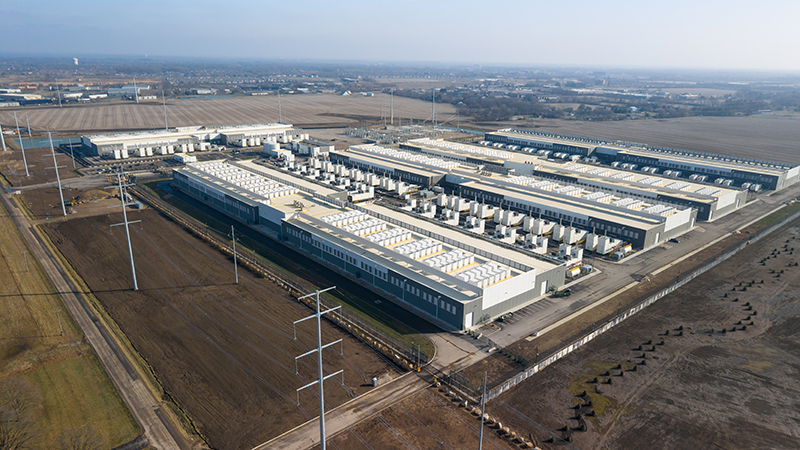
At the same time, Pennsylvania’s AI and data center buildout is changing the infrastructure those security operations depend on.
What The AI Buildout Demands Of The Network
At the July 2025 Energy and Innovation Summit at Carnegie Mellon, companies announced more than $90 billion in Pennsylvania energy and AI infrastructure investment, including a $20 billion Amazon Web Services commitment (Data Center Frontier, 2025).
Homer City Redevelopment is converting the state’s former largest coal plant into a natural gas campus delivering up to 4.4 gigawatts to an on-site hyperscale data center development. Pennsylvania’s Department of Environmental Protection approved its air permit in November 2025, clearing the way for full construction (BusinessWire, November 2025). Those headline totals cover projects at very different stages, from sites already building to commitments that have not broken ground.
That buildout widens what must be defended. Data center and grid infrastructure bring operational technology into scope alongside IT, and it concentrates risk in the connections between them. IBM’s X-Force Index also found large supply chain and third-party compromises have nearly quadrupled since 2020, as attackers target the trust relationships between organizations rather than the organizations themselves. A campus drawing on separate vendors for power, cooling, connectivity, and building management widens its attack surface with each one.
Workloads at this scale need capacity that scales without a redesign, physical path diversity so a single cut leaves a site online, private connections to cloud providers that bypass the public internet, and attack mitigation at the network edge.
By the time capacity, route diversity, or cloud access becomes a constraint, changing the network plan can be considerably harder. Those decisions get made early. Infrastructure teams should understand these requirements before committing to a site.

Where The Network Fits
Training platforms, model testing environments, security operations centers, and data center campuses all depend on high bandwidth, resilient connectivity, and minimal lag when accessing cloud and data center resources.
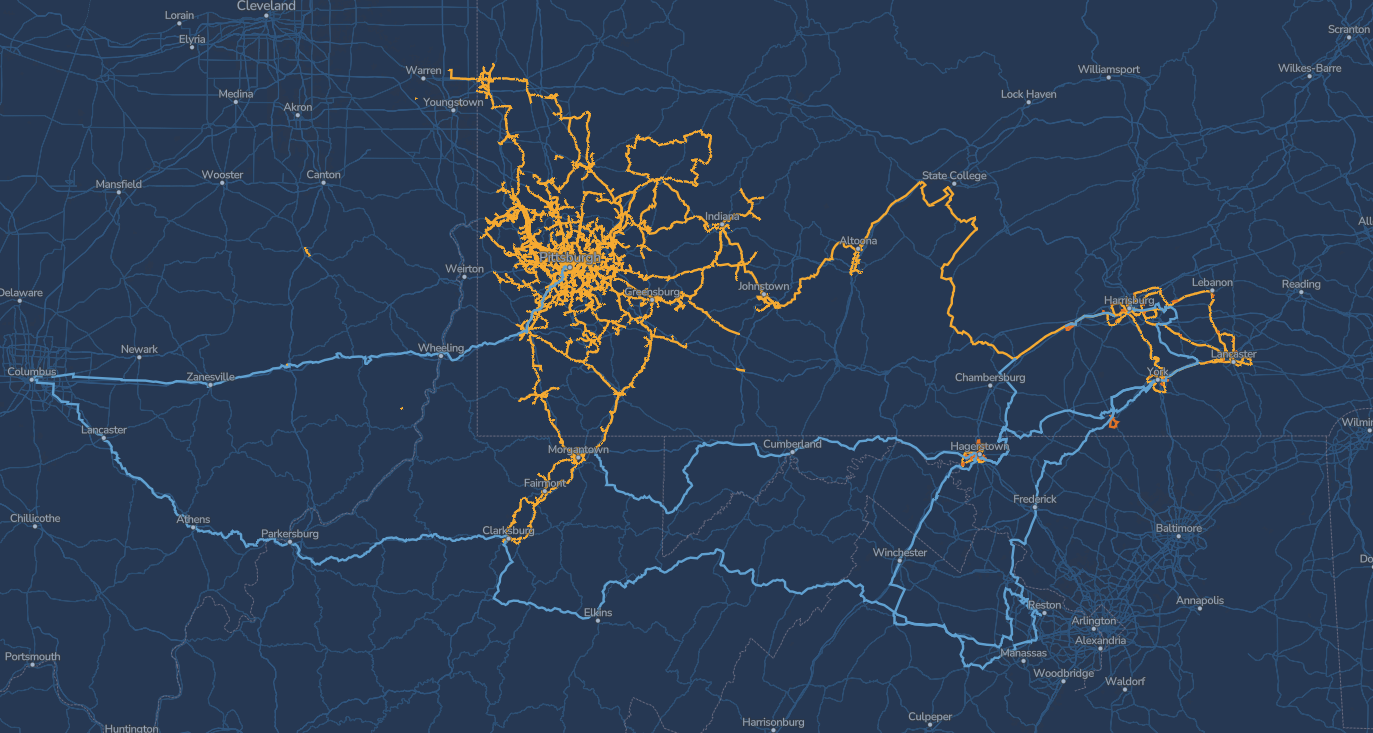
DQE Communications was established in Pittsburgh in 1997 as a dark fiber company. It now operates more than 5,000 route miles reaching 3,500+ on-net buildings and data centers across Pennsylvania, West Virginia, and Maryland, on a backbone it owns end to end, with a self-healing ring design that reroutes traffic in under 50 milliseconds.
Five services map to the requirements above. Dark Fiber gives an organization a private path it operates itself, with topology and equipment under its own control. DDoS Mitigation filters volumetric and application-layer attacks at the network edge, monitored around the clock from a Pittsburgh NOC. Cloud Connect provides private on-ramps to AWS, Azure, and Google Cloud so sensitive traffic stays off the public internet. Wavelengths deliver up to 400G on a private, uncontended optical path, with intra-metro latency typically in the 1 to 2 millisecond range for AI, replication, and real-time workloads. Managed Security combines DDoS mitigation, managed firewalls, and SOC-as-a-service through a locally staffed operation.
If you are building capacity in Pittsburgh or anywhere across Pennsylvania, West Virginia, and Maryland, whether a new SOC, a lab, or a campus expansion, the network under it is worth specifying early.
Pittsburgh Cybersecurity FAQ
The Pittsburgh cybersecurity industry in 2026 is driven by a research pipeline at Carnegie Mellon University and the University of Pittsburgh. Carnegie Mellon’s CyLab launched its Cyber Autonomy Initiative in March 2026, and the NSA designated Pitt a National Center of Academic Excellence in Cyber Research through 2030. That pipeline keeps producing companies as individual firms get acquired.
Two recent Carnegie Mellon cybersecurity companies are Gray Swan and Mayhem Security. Gray Swan, which works on AI model security, closed a $40 million Series A in May 2026. Mayhem Security, formerly ForAllSecure, won DARPA’s 2016 Cyber Grand Challenge and was acquired by Bugcrowd in November 2025.
Pennsylvania’s AI and data center buildout brings operational technology into scope alongside IT. At the July 2025 Energy and Innovation Summit at Carnegie Mellon, companies announced more than $90 billion in Pennsylvania energy and AI infrastructure investment. Each added vendor for power, cooling, connectivity, or building management widens the attack surface a campus must defend.
Security operations centers, AI labs, and data center campuses in Pittsburgh need four network capabilities: capacity that scales without a redesign, physical path diversity so a single fiber cut leaves the site online, private connections to cloud providers that bypass the public internet, and attack mitigation at the network edge. Specify these before committing to a site.
DQE Communications, founded in Pittsburgh in 1997, operates a business-only fiber network of 5,000+ route miles reaching 3,500+ on-net buildings and data centers across Pennsylvania, West Virginia, and Maryland. DQE provides dark fiber, DDoS mitigation, Cloud Connect private cloud on-ramps, wavelengths, and managed security, supported by a 24/7 Pittsburgh-based network operations center.